Ontogenia plantihumana
Marina Daiez
May 15th – July 25th, 2026
INFO
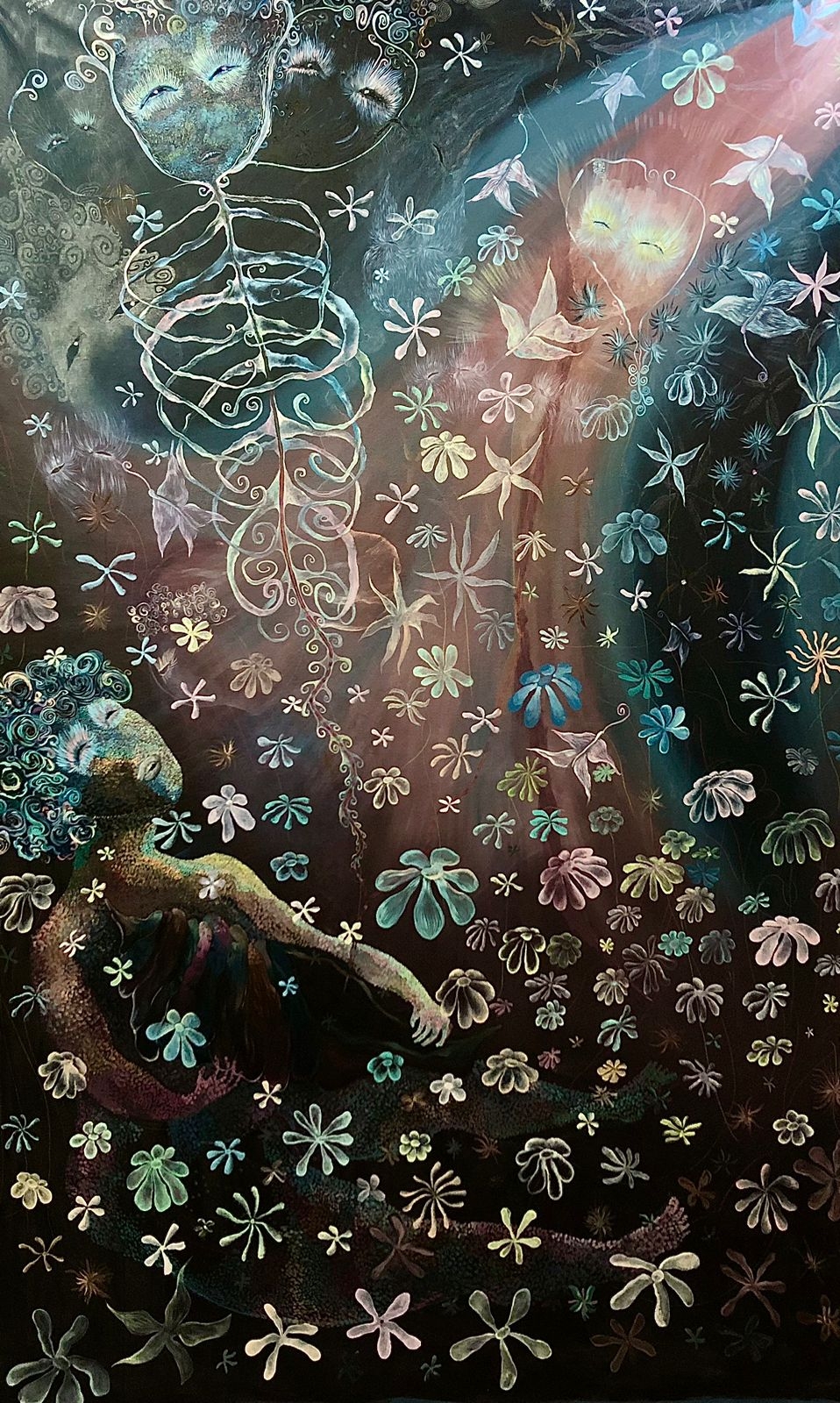
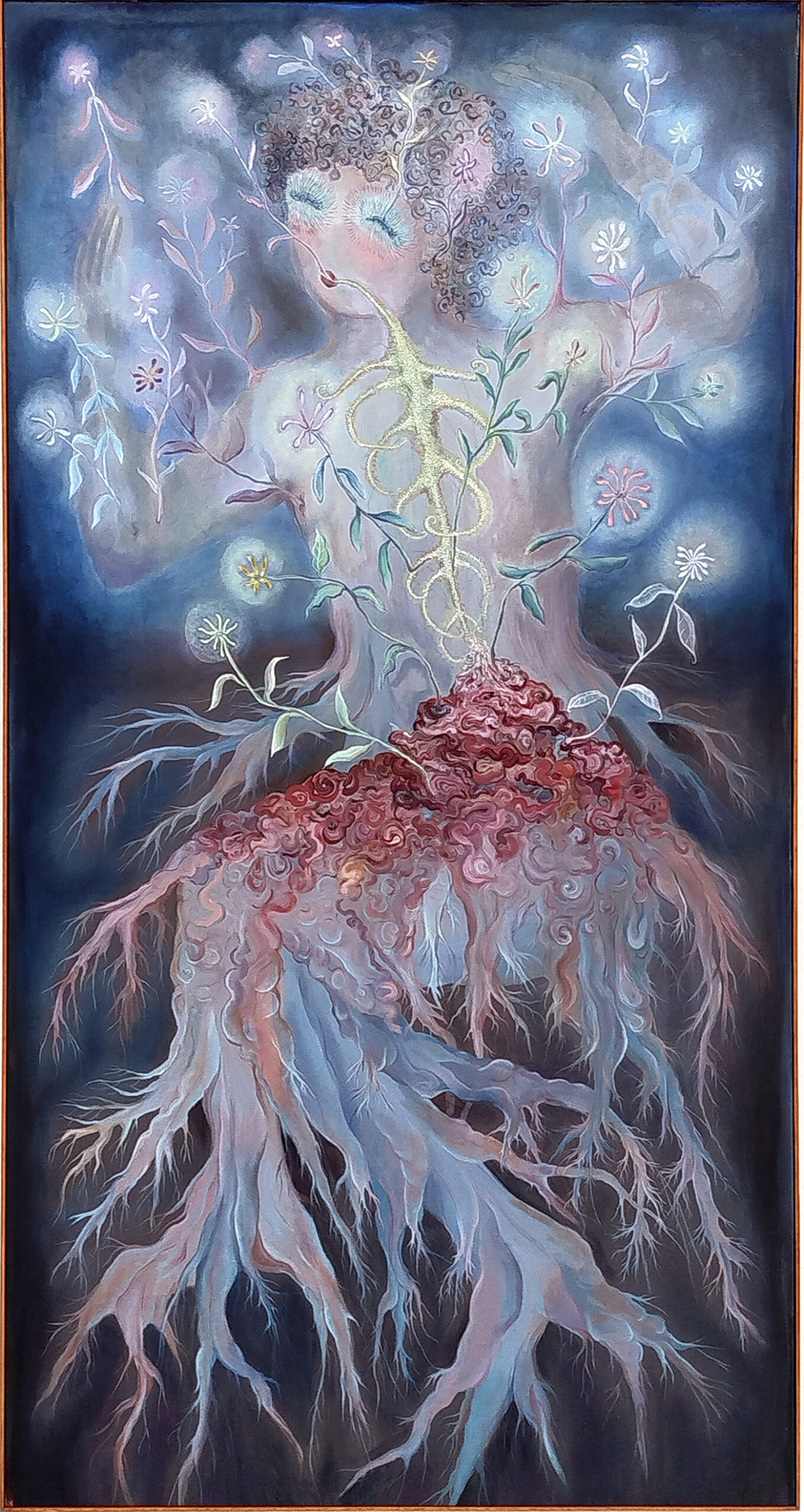
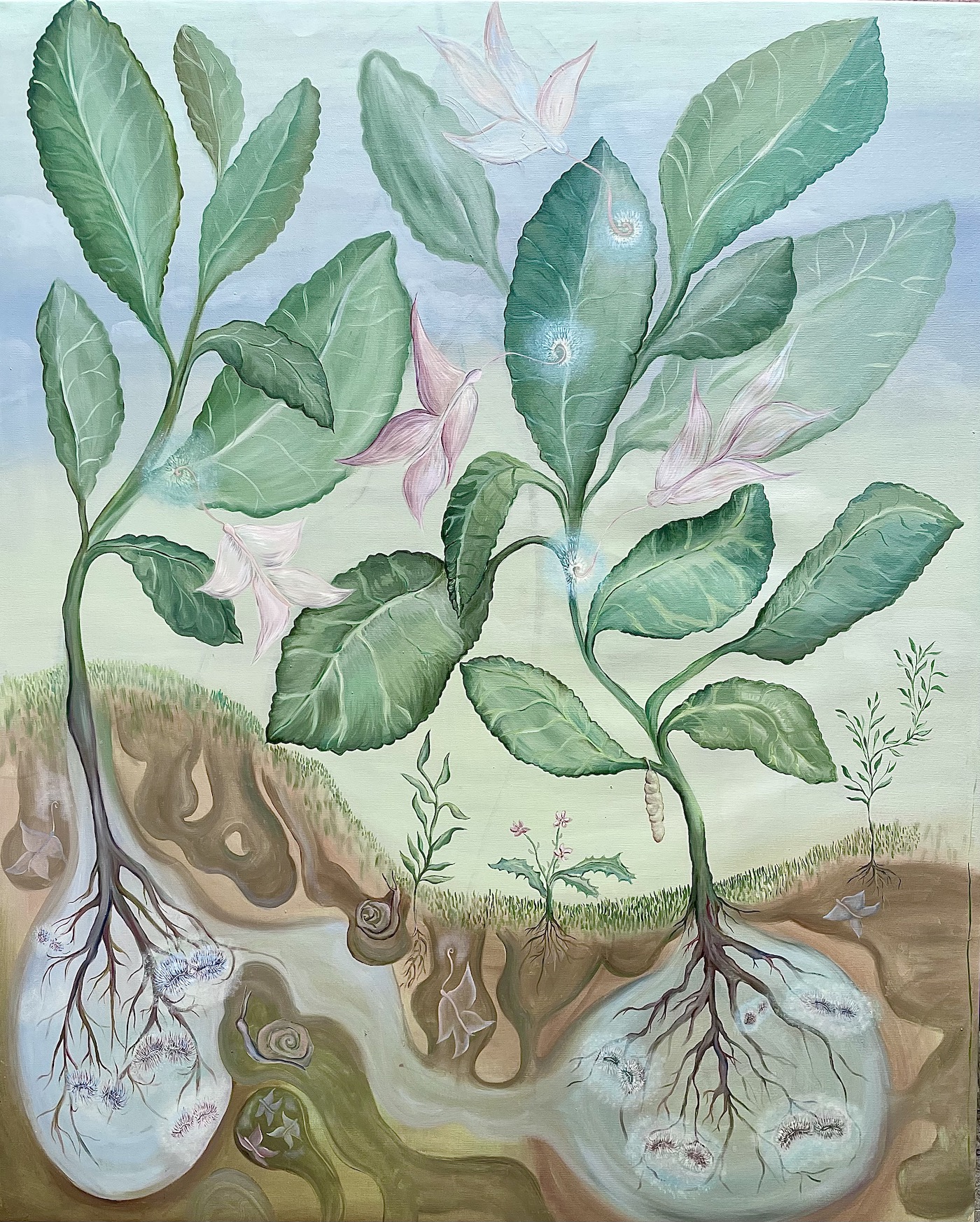
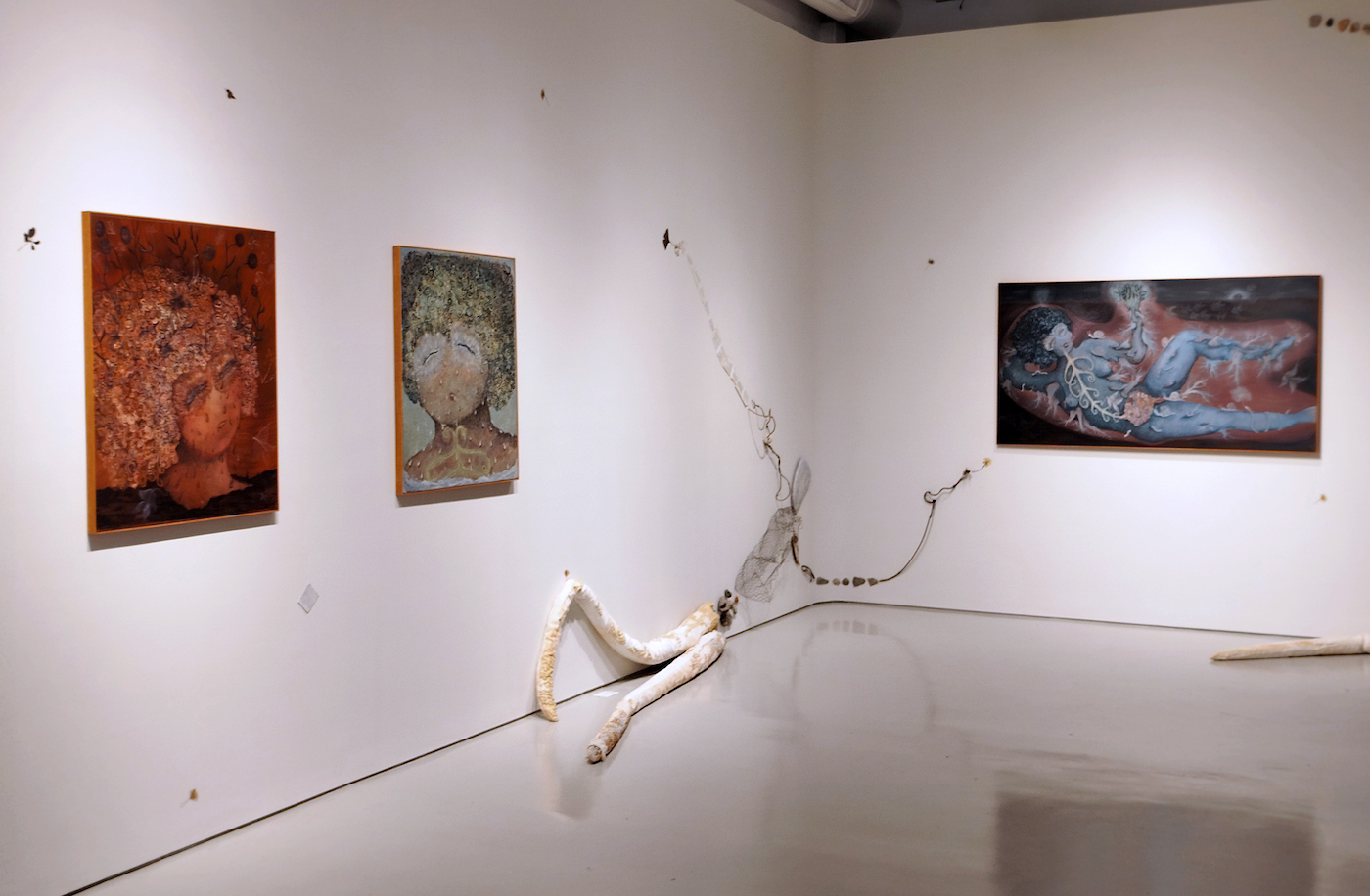
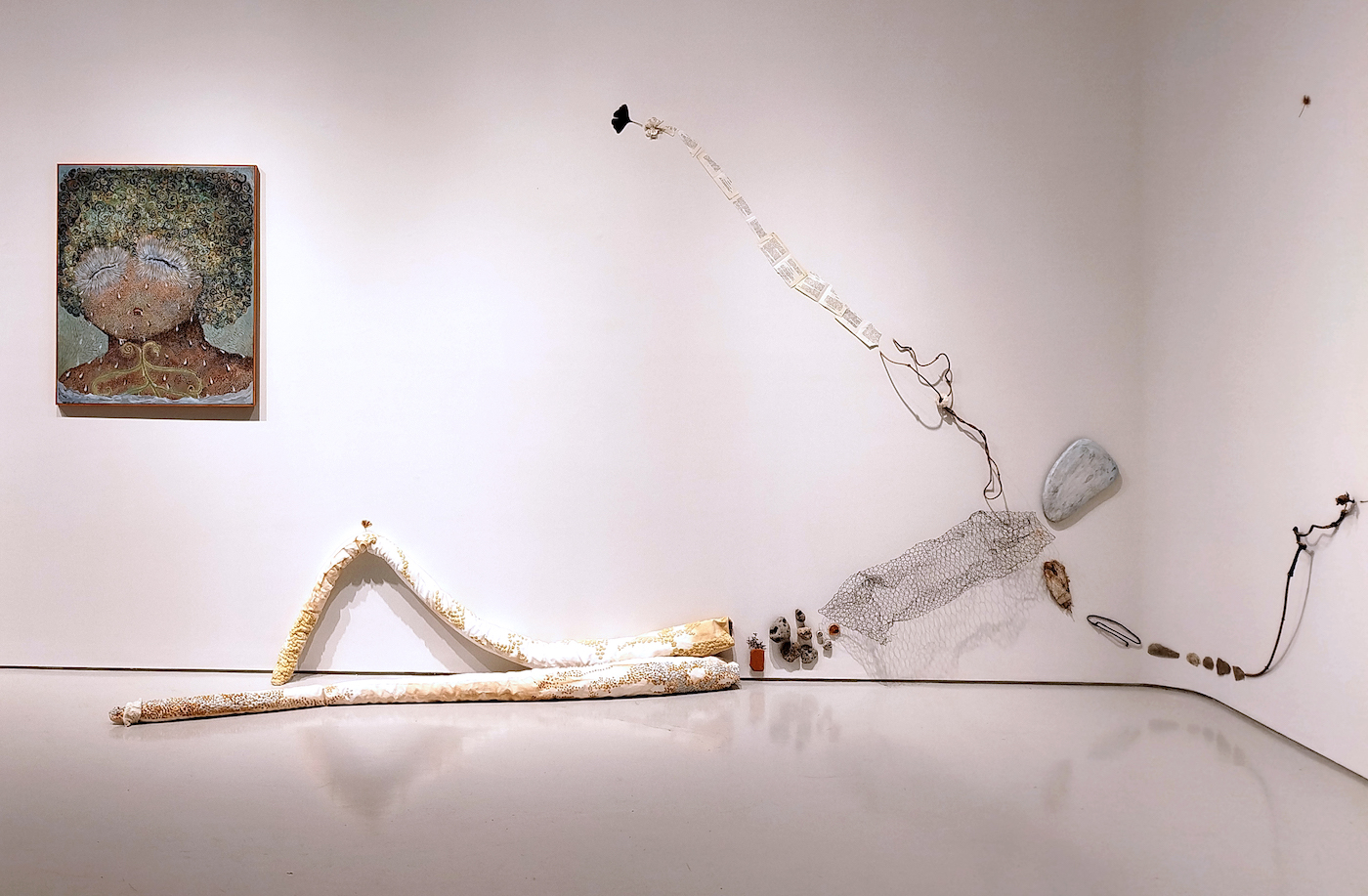
This exhibition by Marina Daiez, her second with the gallery, finds the artist at a moment of consolidation, in which her practice asserts itself through a strong narrative impulse. Daiez conceives the exhibition almost as an expanded literary work: a story narrating the lives of plant-beings, hybrid organisms whose existence seems to unfold according to their own temporality. The title incorporates the word “ontogeny,” a term from biology referring to the development of an organism from gestation through maturity and senescence. Here, this desire to narrate intertwines with a reflection on the ways life becomes, transforms, and relates to its surroundings.
Drawing from the writings of Verónica Gago, Marina adopts the notion of the “body-territory”: a perspective that rejects the possibility of thinking of the body as separate from the geographical, economic, cultural, and affective conditions that constitute it. The body always exists alongside others, including non-human agents; all life unfolds within a network of interdependencies. As Gago writes, this entails “a political, productive, and epistemic continuity of the body as territory,” where the body emerges as a composition of affects, resources, and potentials that exceed the individual.
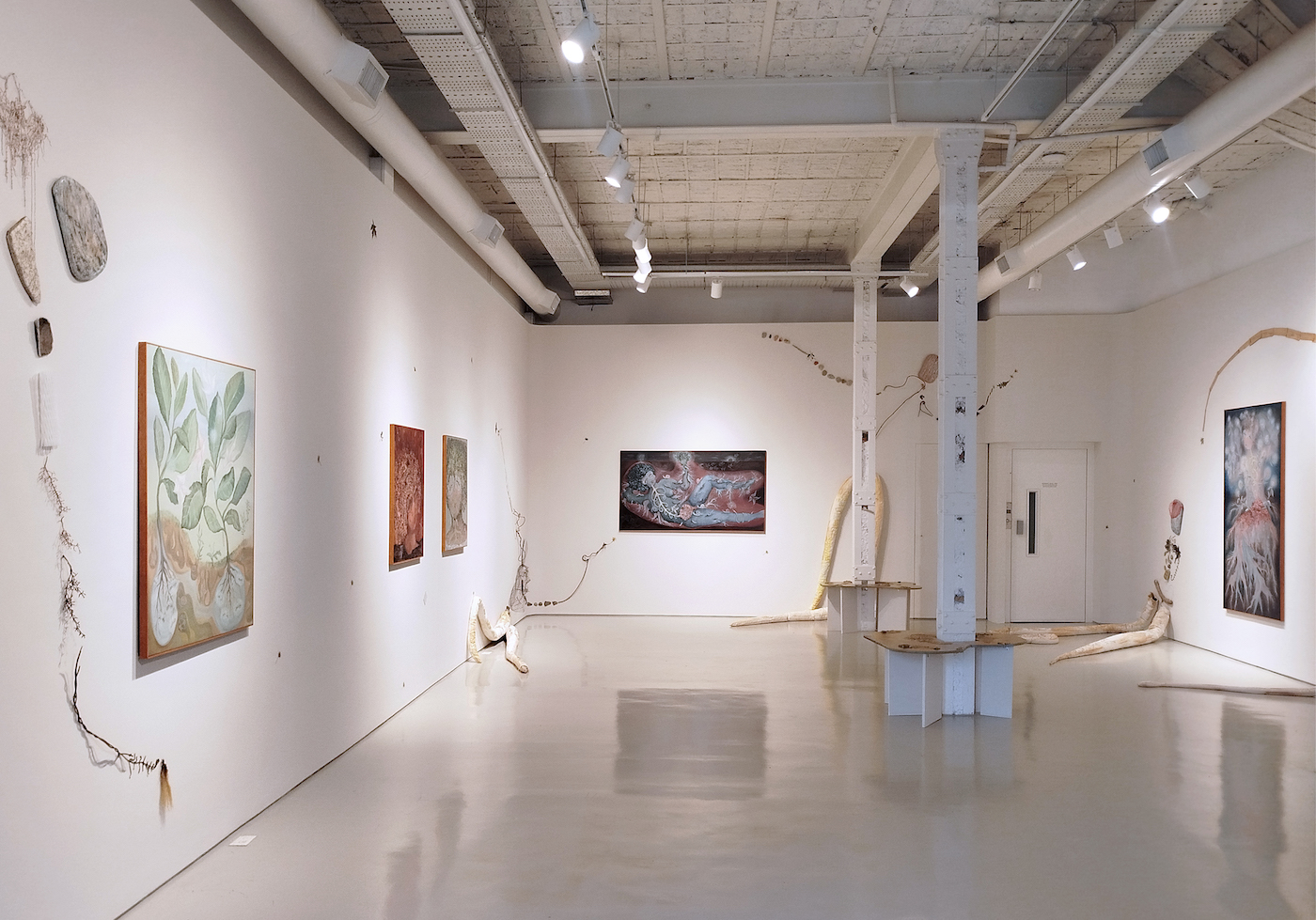
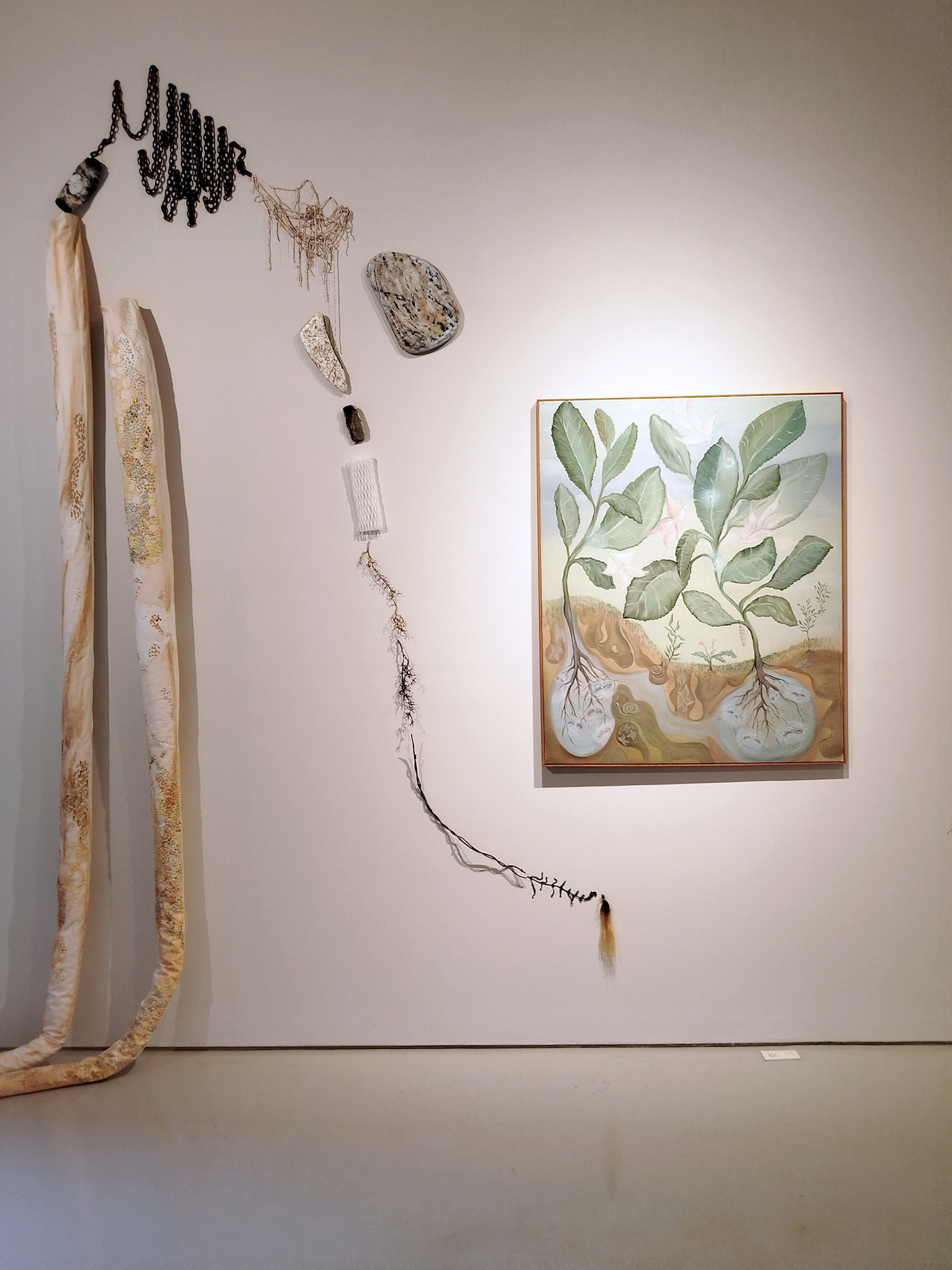
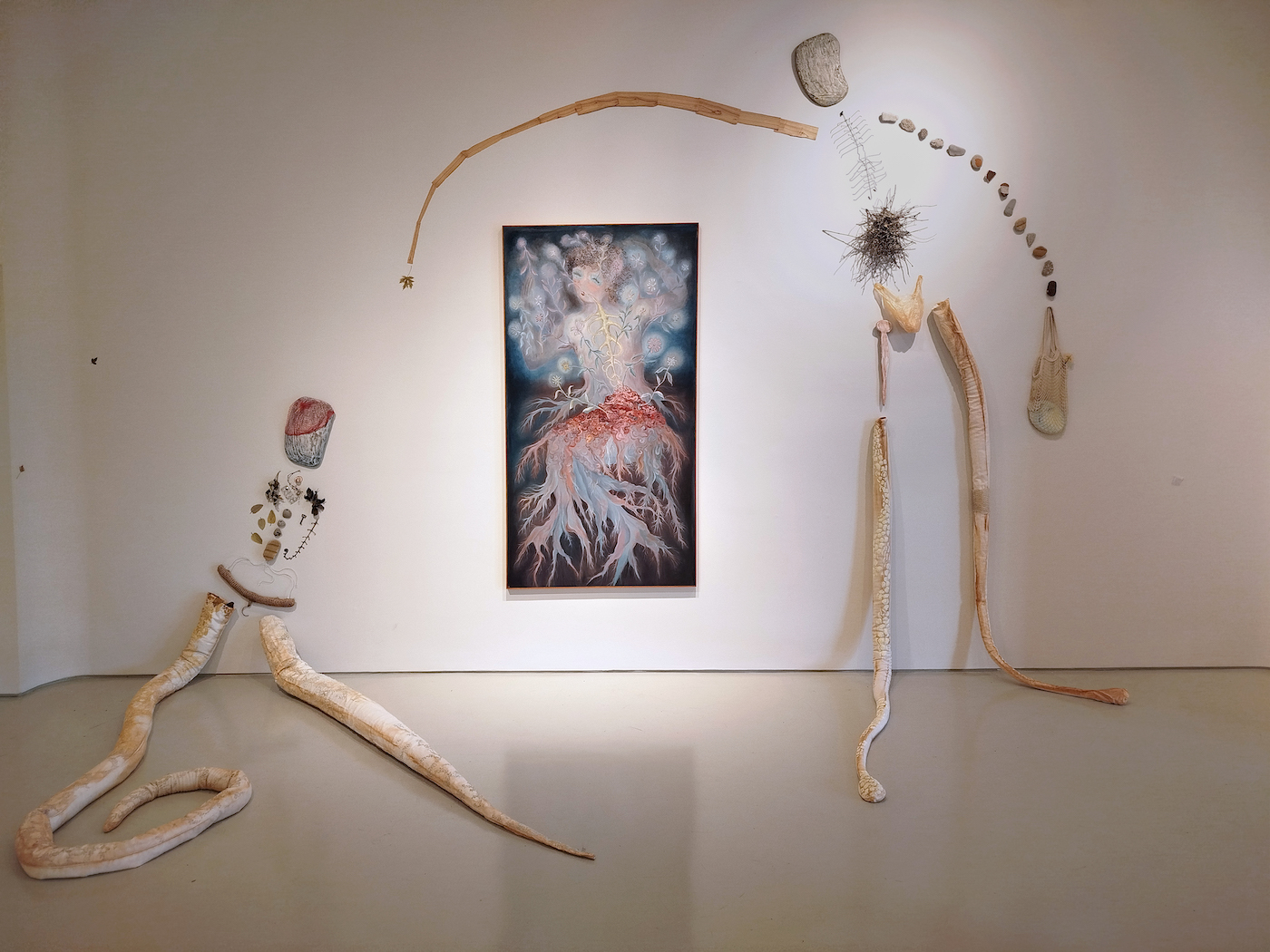
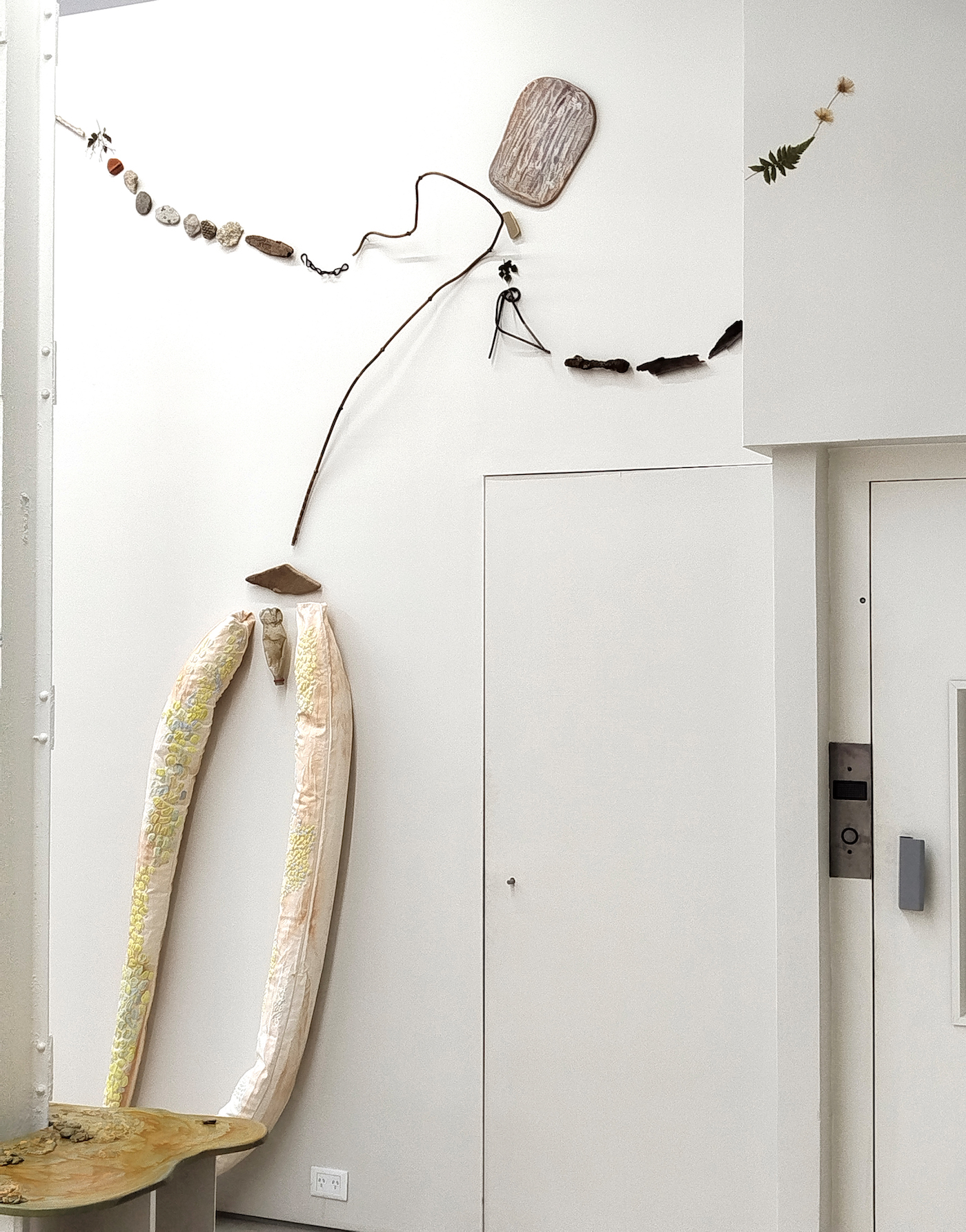
This story of beings unfolds both through the paintings and through the exhibition’s installation-based dimension. The idea of gathering—and also of collection—occupies a central place. Large figures assembled from fabricated and found elements appear to “harvest” the paintings, selecting them according to secret affinities. For Marina, situating the works within a setting inhabited by these beings—alongside dried flowers affixed to the walls or small benches encircling the columns—is essential. The neutrality of the white cube, interchangeable and detached from place, is precisely what she seeks to move away from.
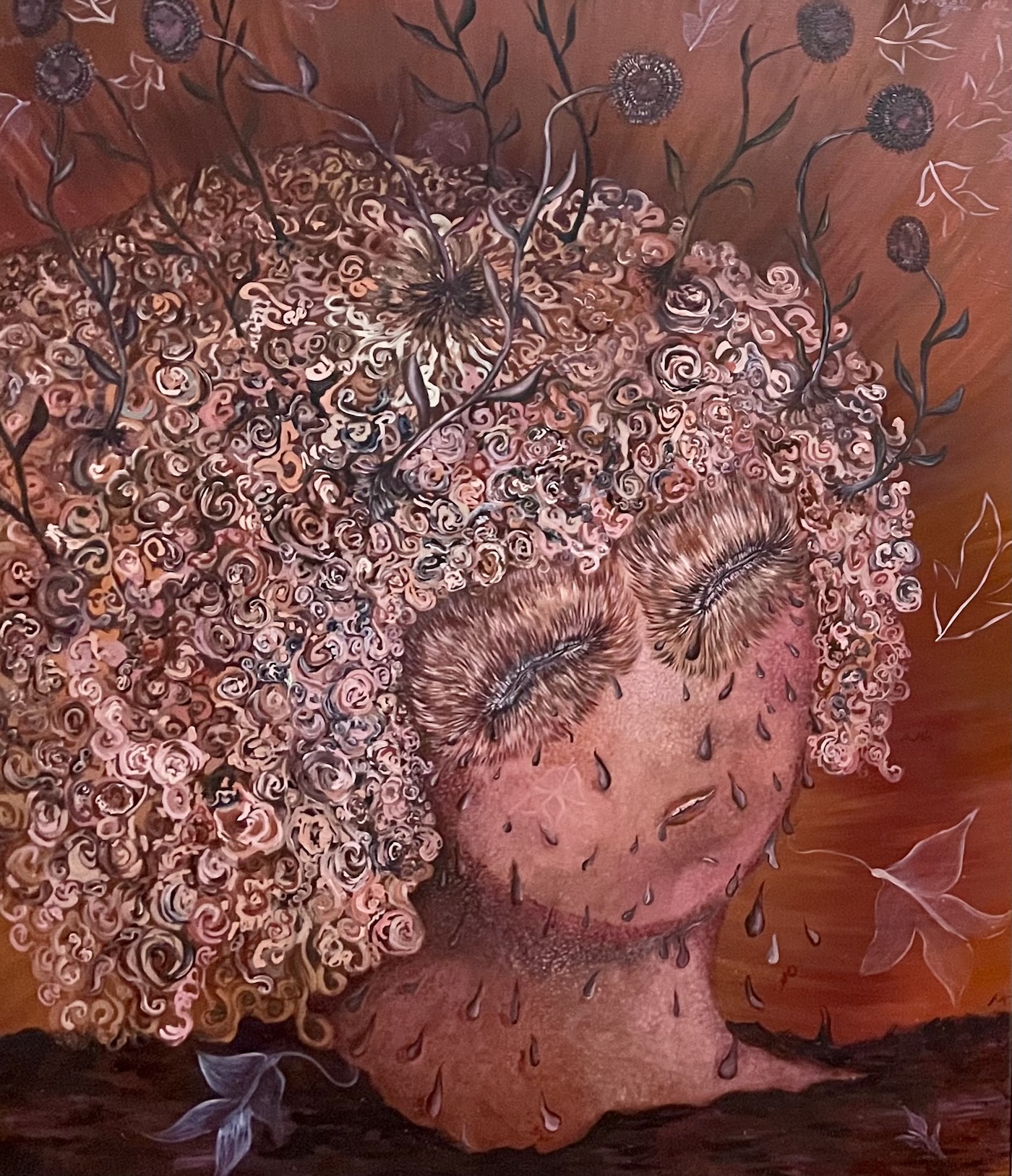
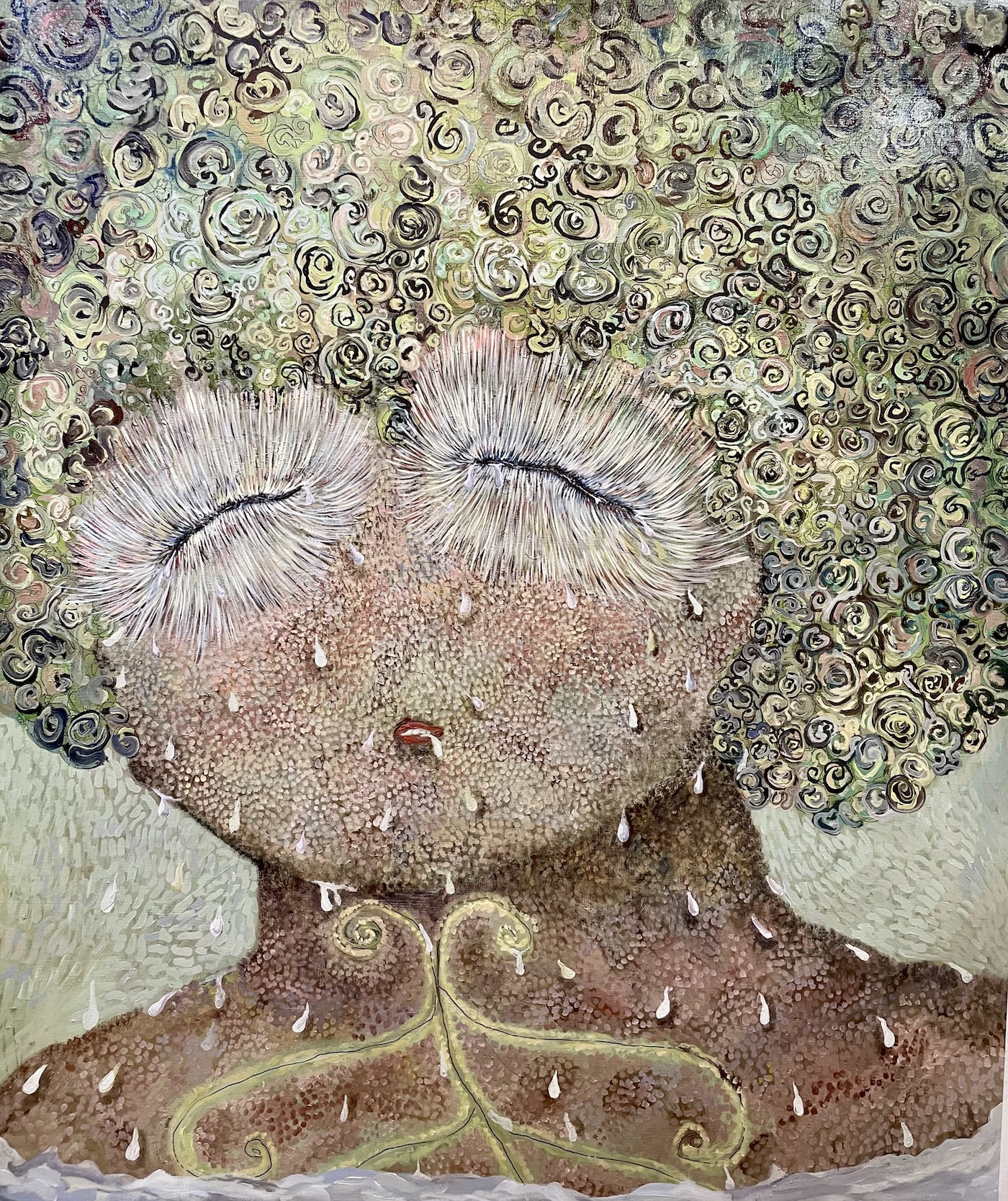
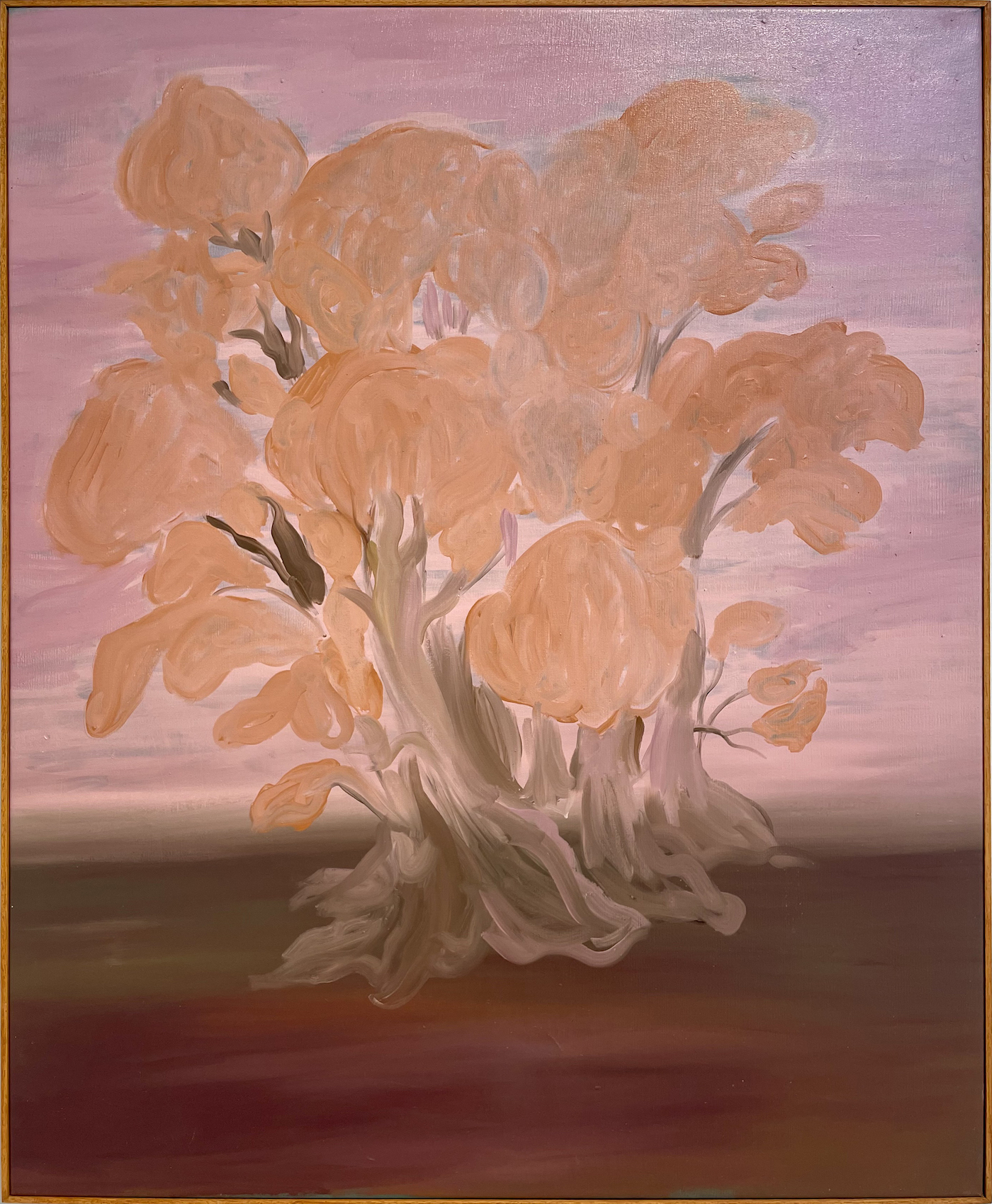
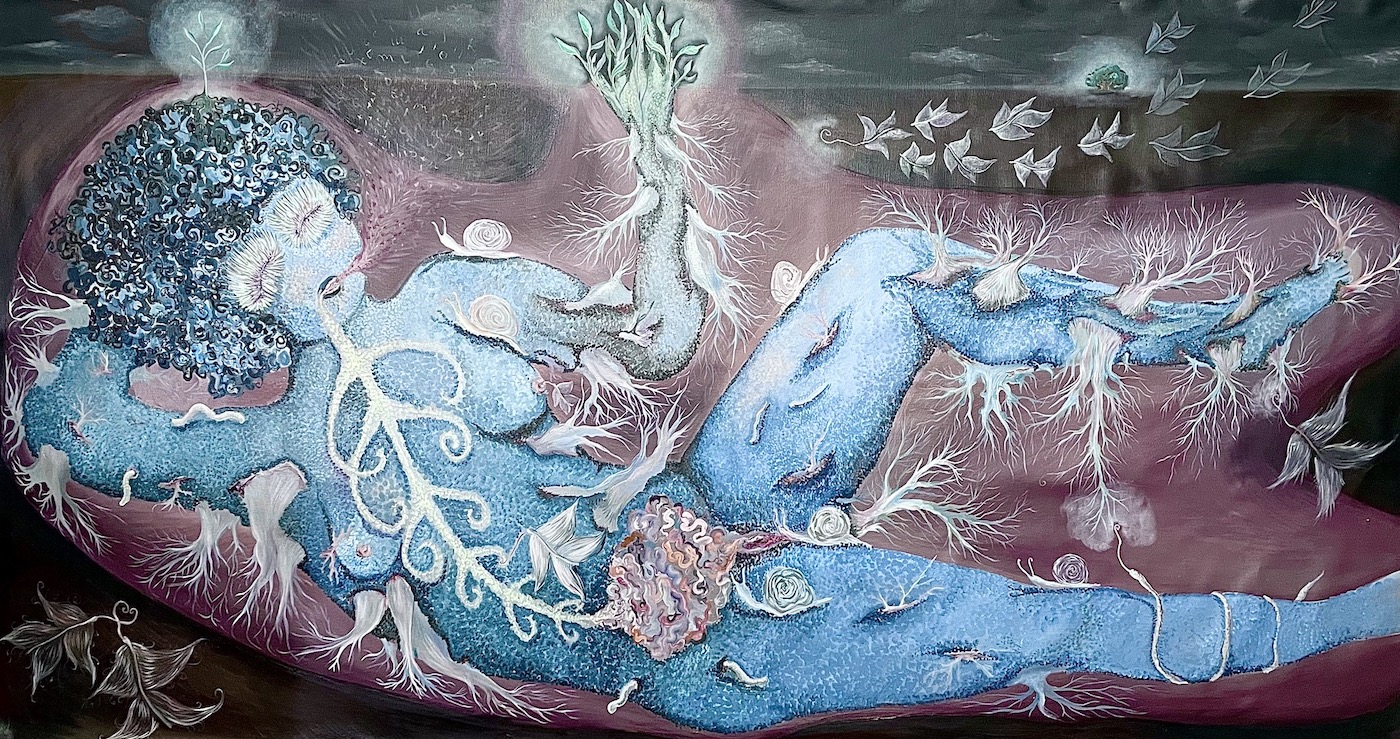
The paintings evoke a genesis of life in which no clear separation exists between being and environment. Tears become water nourishing vegetal growth; surfaces vibrate with a proliferation of details that seem to overflow the limits of the frame, as though the energy of the images continued beyond the visible fragment. Historical references also emerge throughout the works: the quotation of an ombú tree borrowed from a painting by Prilidiano Pueyrredón, rendered here through a more gestural brushstroke, or echoes of the palette of Raquel Forner and other Surrealist artists.
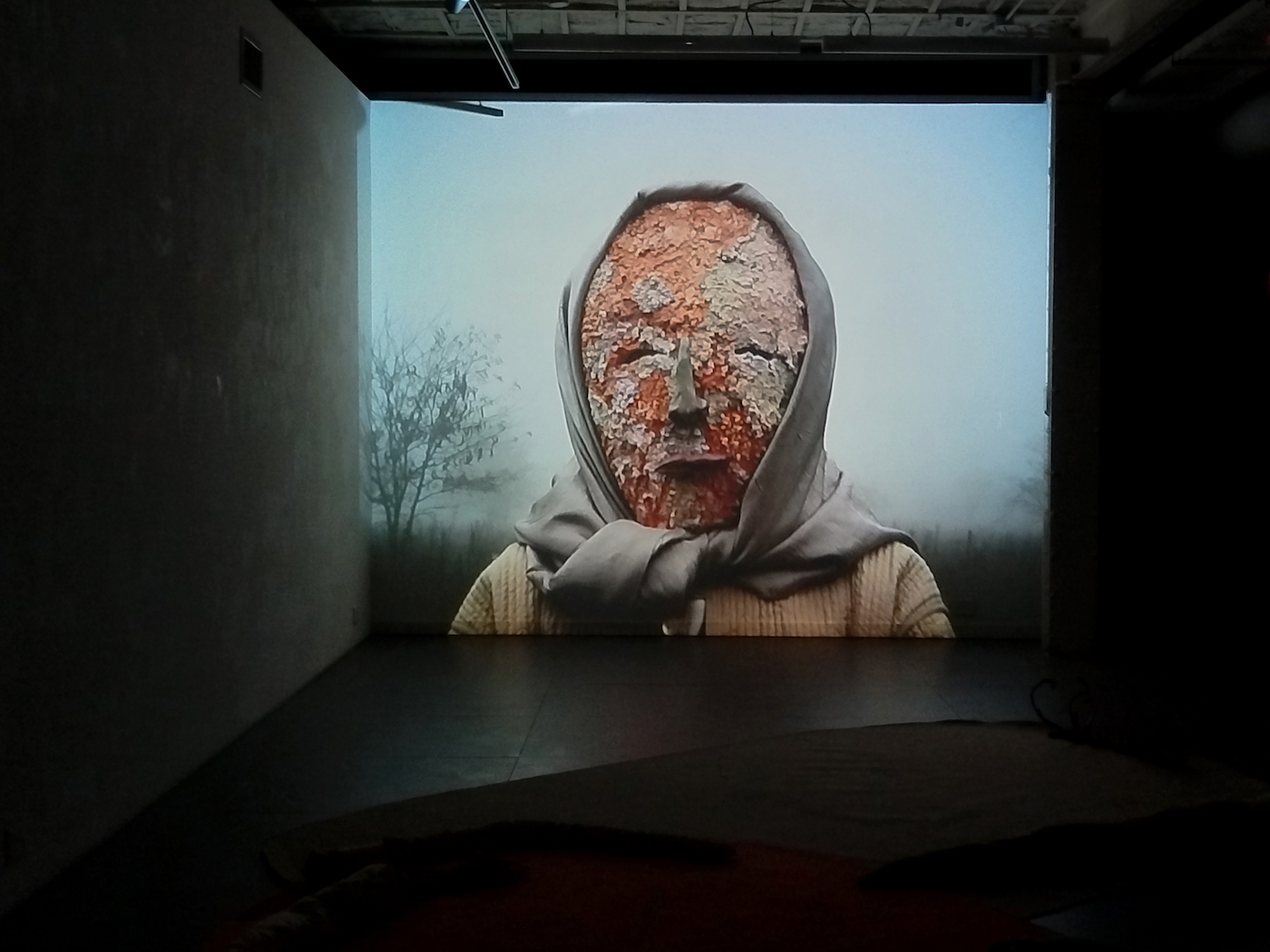
In the basement gallery, the video Bolsa, created in collaboration with Victoria Barca, functions as an audiovisual experiment seeking to translate into images The Carrier Bag Theory of Fiction by Ursula K. Le Guin, dispensing entirely with language. In opposition to the “hero narrative,” fiction understood as a “carrier bag” enables another mode of storytelling: a history of life grounded in gathering, coexistence, and care. In a post-agricultural landscape, a being walks outside of time collecting elements from nature and fragments of herself—parts that constitute her and allow her to connect with the landscape she inhabits. The work thus proposes a poetic narrative oriented not toward the resolution of conflict, but toward an ongoing process of contemplation and exploration.
BIO
Marina Daiez was born in Buenos Aires in 1992. She has presented solo exhibitions at Fundación Cazadores (2022), after receiving the institution’s award; at Biquini Wax (2018); at Centro Cultural Recoleta (2017); and at the Biennial of the Museo de Arte de Bahía Blanca (2017). In 2025 she received a commission to develop an installation project at Palacio Libertad. In 2026 she participated in the Sacred Art Biennial at the Museo de Arte Decorativo de Buenos Aires and was selected for the Premio Klemm. She also received mentions at the Salón Nacional de Pintura (2025) and the Premio Andreani (2021).
Her work has also been exhibited at the Museo Castagnino MACRO (2022), the Museo de Arte Moderno de Buenos Aires (2022), PROA 21 (2019), and the Premio Banco Central (2021), among others. In 2024 she was selected to participate in the inaugural edition of Hito Cultural, a residency program.
Framing and mounting by Eloy Mengarelli.
Textile assistance: Emma Skulsky.
Texts for the fanzine by Paula Fleisner, Paula Peyseré, Lola Granillo, Sofía Dourron, Elisa Palacio, and Renata Molinari.
Special thanks to Dana Ferrari, Emilia De Las Carreras, and Carlos Huffman for their support throughout the process.